
Vitiligo
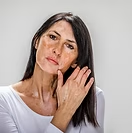
Vitiligo
- Occurs due to selective destruction of the skin melanocytes that results in development of unsightly depigmented patches.
- Onset before the age of 18 years in more than 50% cases.
- Vitilgo can be seperated into segmental and non-segmental types. Segmental vitilgo has important differences in etiology, prevalence of associated illnesses and therapy compared to other forms of vitilgo.
Causes
- Non-segmental vitilgo is most commonly described as having an autoimmune etiology. Both humoral and T cell mechanisms are possibly involved in pathogenesis.
- Segmental vitiligo is possibly due to some chemical mediators released from peripheral nerve endings that cause decreased production of melanin (neural theory).
Symptoms
- Presents as small, depigmented lesions that may enlarge and coalesce into larger patches.
- Vitilgo is most striking around the body orifices: eyes, nostrils, mouth, nipples, umbilicus and genetakua.
- Vitilgo can affect melanocytes in the hair roots resulting in patches of white hair. Depigmentation can affect mucosal areas such as in the mouth or genetalia.
Treatments
Vitiligo having an autoimmune background takes time to recover. In such conditions homoeopathic medicines help to correct this autoimmune condition of cells from within and helps the cells to work in harmony as before. As this cell functioning is improved the skin pigmentation also improves Gradually. So the symptoms of vitiligo also reduces gradually.
Skin Conditions
Main Menu